

St. Teresa of Avila
We sometimes hear people say these are the worst of times, given all that surrounds us today. Yet many years before us were just as tumultuous. Our saint today, Teresa of Avila, reminds us of this. Though she lived 500 years ago (1515–1582), her days were marked by the Protestant Reformation and the Spanish Inquisition.
Into these troubled times, the great Teresa was born into a noble Spanish family. What made this woman so attractive was her complete and utter humanity. Sometimes we think of her as someone so far beyond our own life experiences, given her ecstatic revelations of God's divinity and presence, that we forget about the first half of her life. During those years, she did not always reflect the image we have of her today as a mystic and Doctor of the Church.
In her autobiography, she admits that she was a feisty, rebellious child. In fact, her father placed her in a convent, hoping that her lively spirit would be calmed by such a religious environment.
Indeed, she was changed, and her spirituality deepened, but not easily. In her early twenties, she suffered a serious illness that left her immobilized and near death. Some suggest that the inner tension between her attraction to the advantages of noble life and her pursuit of a deeper spiritual experience contributed to her struggles.
Upon regaining her health, she chose to continue her vocation. Yet, in her autobiography, she acknowledged spending years in a lukewarm relationship with God, during a time when convent life had become somewhat lax.
It was not until her forties that she recognized the need for reform among her Carmelite brothers and sisters and pursued it with unbelievable fervor. She even challenged clerical authorities and faced scrutiny from the Spanish Inquisition as they questioned her intentions.
She is a wonderful model for us today as we face our own challenges.
When we hear the word mystic, we may shy away from the idea that we are all called to be mystics in our life's journey—and that it is never too late to recognize this reality. After all, Teresa did not fully embrace her calling until later in life.
We may not levitate or experience the ecstatic moments of God's presence recorded in her work, The Interior Castle, but we do experience palpable moments of God's presence in daily life—when we are stunned by a beautiful sunrise or sunset, sit with a dying person, or witness the magnificence of spring's new life. These moments invite us into the experience of mysticism. Unfortunately, we do not always take enough time to savor them.
Although we may never reach the depths of Teresa's mysticism, our ordinary, everyday mystical moments are precious in the eyes of our dearest friend, Jesus, because God's heart has no hierarchy of love.
– Sister Helen R. Boyd, OP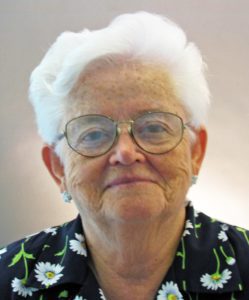
Sister Helen resides in Dominican Convent where she serves on the Life Enrichment Committee and co-chairs the Mission Outreach Committee. She also preaches regularly and helps coordinate rides for the Sisters.