

Tonight, we celebrate the most improbable mystery of all time. The Scriptures remind us of the human genealogy of the birth of a special child, promised through many generations. What was not expected was the manner in which this long-anticipated event would take place. For in ages past, humankind was—and still is—impressed with might, power, and majesty. Humility and simplicity were hardly admired, even to this day. How true are the words of Scripture: “God’s ways are not our ways, nor God’s thoughts our thoughts.”
It is hard to imagine that the Creator of the universe, which we are still completely unable to fathom in all its magnificence, would condescend to become part of a minute world. This type of humility is beyond our understanding. How does anyone conceive of a God who would deliberately choose to be born of the most humble and poor parents, placed in an eating trough for animals, and visited by the most unlikely outcasts of common people—the shepherds of Bethlehem?
Evidently, our God’s intent was to turn our thinking upside down and to remove the mask of fear from our hearts by demonstrating that distance no longer existed between us and our Creator. To do this, God chose to come to us as a vulnerable infant. Whose heart does not melt when beholding a newborn baby? This is what our God says to this holy eve: I desire you to perceive me not as a majestic, almighty God, but as one who is the most approachable, loving presence in your life.
During this season of the year, we are inundated with the pressure of gift-giving and with what we must have and give in order to fulfill every earthly desire. Advertisements flood the media about the latest gadget or product that is a must-have. The season, which began with the greatest gift already given, has become a clouded concept and, unfortunately, lost in commercial distraction. How can we possibly remedy this reality? One way would be to contemplate the lessons of the first Christmas and how Jesus chose to be born and to whom he first chose to reveal his presence. Jesus points to the poor and the most vulnerable of humanity in the persons of Mary, Joseph, and the shepherds.
He spent his entire life with the most disenfranchised of his time. He chose to mingle with the neediest, who could never reciprocate in any way for the wonders he did among them—just like ourselves today and all that has been given to us. Not so long ago, I heard a person state that if we have a few coins in our pockets, a roof over our heads, and a meal every day, we should consider ourselves royalty compared to 90% of the world’s population. Thus, should we not follow his example by being ever mindful of the people around us who will not be able to care for their children or have the abundance of resources that we enjoy?
It is easy to give gifts to those near and dear to us, but what about those who can never reciprocate and are unknown to us? By doing so, we plant the seeds of peace, which has eluded us for so long—because we allow disparity and inequality to persist in our world. Until such divisions are healed, we will never be able to join the choir of angels singing “peace on earth and goodwill to all.” As we approach the altar this evening to receive the Word made flesh, let us ask him for the grace to be his instruments of peace in our world.
Sister Helen R. Boyd, OP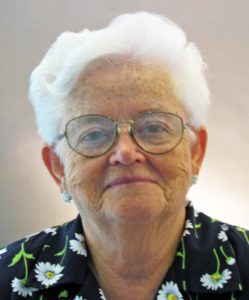
Sister Helen resides at Dominican Convent, where she serves on the Life Enrichment Committee, co-chairs the Mission Outreach Committee, and organizes transportation for the sisters. She regularly preaches and shares reflections.