
The first verse from the Isaiah reading (Isaiah 11:1-10) we heard this evening said:
“Then a shoot will sprout from the stump of Jesse; from Jesse’s roots, a branch will blossom.”
According to Google, the stump of Jesse is a biblical prophecy that symbolizes hope for a future ruler from the line of Jesse, the father of King David. It represents the seemingly dead or devastated royal family line, from which a new shoot will emerge to bring a kingdom of peace and justice. As we know, this prophecy is widely understood to refer to the coming of Jesus.
Much is written about Jesse’s roots and the lineage of Jesus with references by Matthew and Luke. While accounts differ, they both lead us to Jesus who models and teaches us how to live life to the fullest. We hunger to learn who Jesus was and how we can live in his spirit, carry on his lessons and teachings.
In today’s society, knowing my roots can refer to my family history, my home, or my core values and heritage. It has become very popular for individuals to look into their family tree, to learn what they can about their ancestors, their values, traditions, and culture. Perhaps you have had the experience of a cousin, a niece or nephew contacting you to find what information you have gathered about your heritage and asking you to share it.
Some individuals have even met with their elders and interviewed them, recording their memories of long past and sharing stories of important family events. More tech-savvy folks nowadays buy into Ancestry DNA to help connect you to the people and places that, they advertise, make you who you are today, pinpointing neighborhoods and sometimes even providing addresses of your ancestors.
As we hear these stories, like with Jesus, the facts or accounts may differ as told by various relatives, but the core values surface and can be of value to us and influence our behaviors.
Knowing our spiritual roots can be a helpful avenue to knowing ourselves better also. We have learned so much about Dominic, Catherine of Siena, Martin de Porres, Rose of Lima, Thomas Aquinas and others. Some of us have been fortunate enough to have visited places of our Order’s roots in Regensburg or Fanjeaux. We have studied our foundress’ lives and have, at times, been moved to take actions replicating their courage and innovation to respond to the needs of our times.
As Sparkill and Blauvelt Sisters, many of us, perhaps even most of us, have known each other for 40, 50, even 60 years. There are many positives we have experienced and have come to know about each other as a result of spending so many years in ministry together and/or living together.
We have shared our vocation stories, our joys and struggles, our families’ weddings, births and deaths. Our lives are entwined; our heritages are interwoven.
Because we are so familiar with each other, we sometimes don’t realize many of us do not know or remember each other’s individual story. Hopefully, we take advantage of opportunities to share our personal stories with each other again.
From Jesse, to Jesus, to our ancestors, to our families, from the Order to our Congregations to us as individuals, a shoot will sprout!
After we heard that first verse from Isaiah, we are treated to encouraging phrases, inspiring images of what goodness looks like:
The wolf will dwell with the lamb.
The calf and the lion cub will graze together.
There will be no harm, no destruction.
Justice will be the belt around your waist.
You will treat poor people with fairness.
While these are encouraging phrases and inspiring images of what goodness looks like, this is largely not what we experience in our world today, not life in the United States today.
We live in a time filled with division and isolation. The haves are getting richer and the have-nots are getting poorer. Our country no longer recognizes that we are all one people, one nation under God. The haves are getting richer on power. The have-nots are getting drowned in powerlessness, hiding from the masked, armed enforcers who sweep in and gather up a crowd of mostly Black or Brown people, men and women, in and outside schools, churches, and courthouses.
The powerful justify their actions by saying we are protecting you from violence and drugs, from rapists and murderers. Illegals don’t belong here. The powerless cry out their innocence, proclaiming their legal status, their citizenship, their love for America. Our equal branches of government are no longer functioning as equals. Our system of checks and balances is strained and near nonfunctioning. The premise that we are innocent until proven guilty is falling into a rabbit hole, becoming but a passing memory. People who are arrested, tried, and found guilty of violent and heinous crimes are pardoned without explanation. Lastly, our neighbors in the National Guard and our men and women in the military are being asked to do things that will forever change their lives—from rough handling and tear-gassing citizens to blowing up boats.
We live in a time filled with division and isolation. We have devolved into the haves and the have-nots. We have become a people with unbridled power over others, or we have become a people succumbing to fear and intimidation.
Is this what Jesus would want of us?
To hold power over others or to cringe in fear and intimidation?
Is this who we want to be?
Are these our only choices?
During a recent audience Pope Leo said:
As Christians, we are to do good, and not hesitate to take a stand for what is right. He urged us to turn to the Lord to show us how to take a stand in our own lives to promote a society that truly reflects Gospel values.
As we conclude this reflection, let us consider words from our sister Joan Chittister, writer and activist, from her book The Time Is Now:
The world cannot afford “unconscious prophets” much longer.
On the contrary. We need to decide on which areas of change we ourselves want to concentrate. We are here to be messengers of God.
We are here to be a rudder on the ship of life,
We are meant to be heralds and watch guards,
Lovers and followers of Jesus who called all of Israel
To remember the poor,
Save the women,
Embrace the outliers,
Consort with foreigners,
And wrestle the law to the ground of compassion.
It is a most exalted—most demanding, most dangerous—calling.
But without it, we will never become the whole of ourselves.
So let us ponder our roots, the words of Pope Leo, Joan’s challenge to us!
What is our loving, compassionate God asking of us today—in our time?
~ Sister Ellenrita Purcaro, OP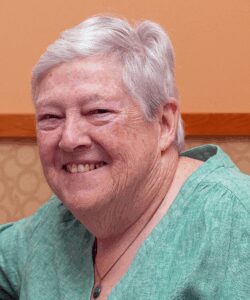
Sister Ellenrita is a Sister of Saint Dominic of Blauvelt, New York, and currently serves as a Counselor on the Congregation’s Leadership Team. She has ministered in a variety of settings, including the Highbridge Community Life Center, St. Dominic’s Home for Children, Dominican University, and several other ministries.