
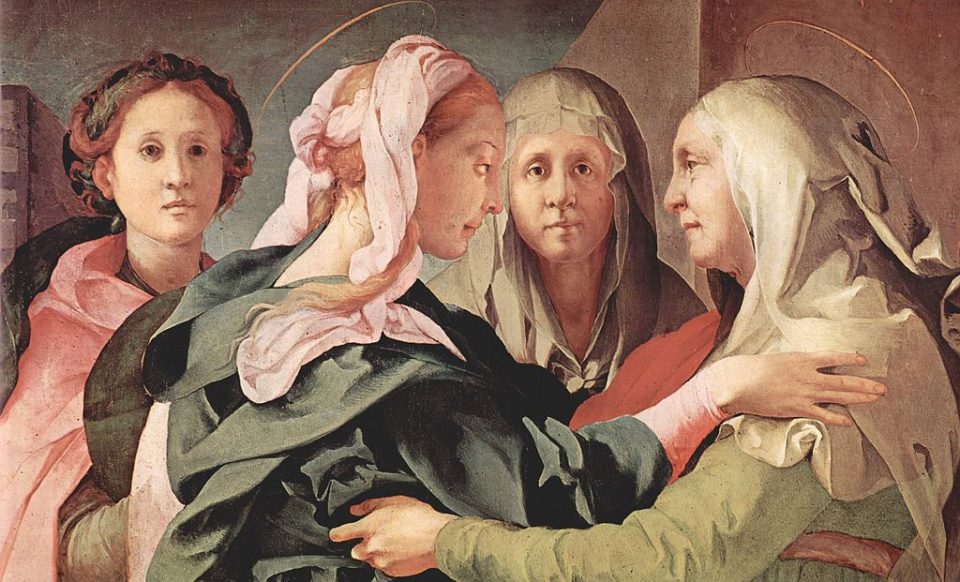
The Feast Day of Visitation is an event of faith, compassion, joy, gratitude, and love.
This event has great significance in the Bible. If a woman goes to visit her sister, what is unusual about it? Family visits are normal. It could not have been the first time that Mary visited her cousin Elizabeth.
But the journey of the Blessed Virgin Mary from Nazareth to the hill country into a city of Judah was not just an ordinary visit. It was a journey of faith, trust, and love.
Physically, it was a dangerous, long journey of about 80 to 100 miles. As a young lady, she was vulnerable. There were risks of robbers, wild animals, and harsh weather. Yet she was able to complete her journey safely. Her trust in God and her love for her neighbor enabled her to reach her destination. As the Bible says, God protects those who trust in Him:
“For He will command His angels concerning you to guard you in all your ways.”
(Psalm 91:11–13)
Her heart was filled with joy and gratitude when she heard from the Angel that God had blessed her cousin in her old age. She did not doubt that her God is the God of wonders.
“For with God nothing shall be impossible.”
(Luke 1:37)
The Almighty God took pity on Elizabeth and removed her shame and sorrow of being barren. In the Bible, barrenness was often seen as a curse or a sign of suffering.
- Rachel was in deep distress because of her barrenness.
(Genesis 30:1)
- Hannah was mocked and provoked because she had no child.
(1 Samuel 1:6–7)
- God shut the womb of Abimelech’s household because of Sarah, Abraham’s wife.
(Genesis 20:18)
Why was Elizabeth barren?
In the Old Testament, there was a common belief that suffering happened because of sin. But Jesus later changed this understanding. Once, the disciples asked about a blind man:
“Master, who sinned, this man or his parents, that he was born blind?”
(John 9:2)
Jesus replied:
“Neither this man sinned, nor his parents, but that the works of God should be made manifest in him.”
(John 9:3)
In the same way, Elizabeth was chosen so that the works of God might be revealed through her life. This faithful woman was blessed and enlightened to recognize God's presence. With great humility and joy, she proclaimed:
“Blessed are you among women, and blessed is the fruit of your womb. But why am I so favored that the Mother of my Lord should come to me?”
(Luke 1:42–43)
The Feast Day of Visitation is not only the meeting of two relatives, but also the meeting of two prophets. Even before his birth, John the Baptist leaped for joy when he heard the greeting of the Mother of our Savior. Together, these blessed women praised the Lord, the God of wonders.
Mary stayed with Elizabeth for three months to serve her in her needs, even though Mary herself also needed care. This is a beautiful example of humble service, love, and self-denial.
The Feast Day of Visitation invites us to trust in God in all circumstances, because He answers our prayers at the right time. It also teaches us to be open and ready to help our neighbors in their time of need. As it is the greatest commandment:
To love God and to love our neighbor.
Happy Feast Day of Visitation.
– Sister Sadaf Aamir, OP
Sister Sadaf ministers as an office assistant in the Dominican Convent Higher Secondary School in Bahawalpur, Pakistan.